

Disclaimer. Please read full disclaimer at the end of the page before reading the report. This publication is only for information and entertainment purposes. It doesn’t constitute financial advice.
The information provided in this blog is for informational purposes only and should not be considered as financial, investment, or professional advice. The valuations and analyses presented here are based on publicly available.

Dear reader,
A lot has been written about LVMH, yet many people still don’t fully understand this company. LVMH is a conglomerate of brands operating in the premium and luxury space. From fashion to Champagne, and even yacht manufacturing, LVMH is much more than just Louis Vuitton.
Now that the group is facing some pressure on revenue, the investment community continues to debate: Is LVMH luxury?
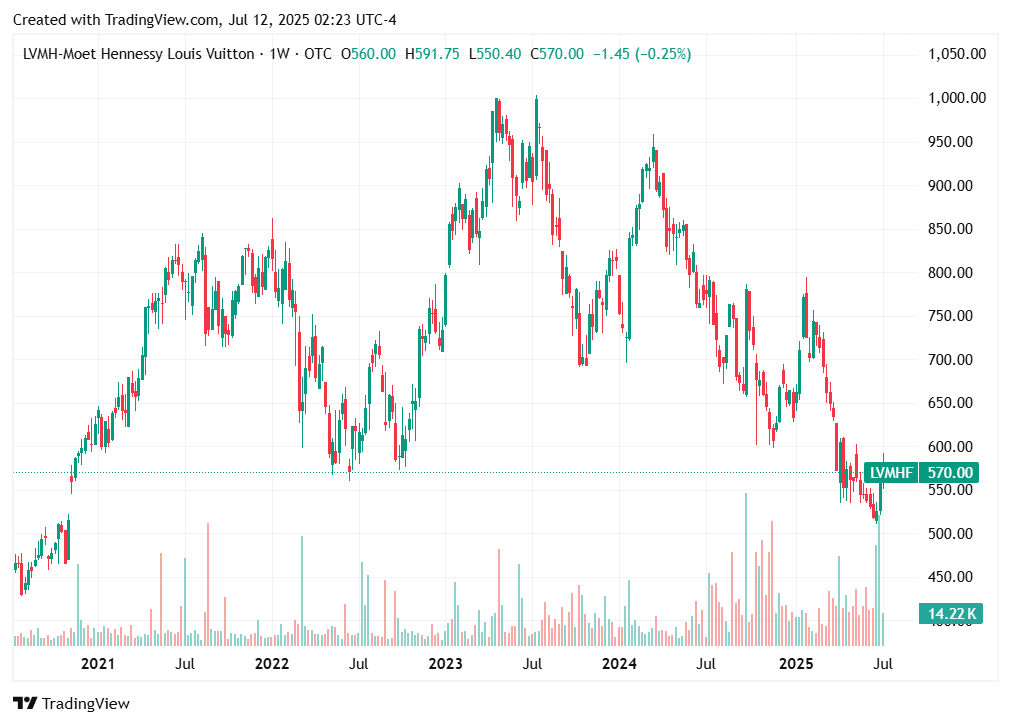
The question is simply wrong. Brands like Louis Vuitton are luxury brands — but LVMH is far more than just a debate over whether it's a luxury or non-luxury company.
It’s a conglomerate of dozens of independent brands. From champagne to yacht manufacturers. Yet, the market only focuses on Louis Vuitton - which makes sense as it represents a significant amount of the earnings, but LVMH is much more than that.
In this series of posts, we’ll cover each of the company’s business segments. I will do a deep dive of each division - something you won’t see in any other Substack account.
To do so, I’ll follow the same structure LVMH uses for reporting:
Wines & Spirits
Fashion & Leather Goods
Perfumes & Cosmetics
Watches & Jewelry
Selective Retailing
Other Activities
In the final post, I’ll bring everything together to form a complete view of the company — its present, and its future.
Executive Summary
Wines & Spirits represents the roots of LVMH. However, in recent years, it has become the weakest division, underperforming compared to the rest of the group.
Mr. Arnault has appointed the CFO of the Group as the new head of the division — a clear sign that a turnaround is expected. The goal is to improve profitability and avoid more quarters of negative growth.
This division continues under a partnership with Diageo - this is helping to mitigate the current negative environment, as 1/3 is not owned by LVMH.
The Champagne and Cognac businesses currently return a decent ROCE, but below other segments. In the past year, the ROCE of this division has dropped by more than 200 basis points (2 percentage points), while inventories have increased by over one billion euros.
While the division is currently under pressure, this business is several centuries old, doesn’t have any risk of disruption, and it’s extremely difficult to compete against brands like Moët et Chandon.
In this post, we’ll explore the brand portfolio, analyze the division’s profitability, and compare LVMH’s performance to competitors like Laurent Perrier and Rémy Cointreau — as well as to global peers like Diageo.
🔒Content below is for premium subscribers only. I’m currently offering a 15% discount or a 7-day trial.
